
"endangered species"
200 article(s) found

Costa Rica Guanacaster Coffee hand siphon Press Pot Philharmonic pressing method
Professional Coffee knowledge Exchange more information on coffee beans Please follow Coffee Workshop (official Wechat account cafe_style) Guanacaster Nature Reserve, Costa Rica is an important natural habitat that maintains biological diversity, including the best dryland forest habitat, biological communities from Central America to northern Mexico and major endangered plants and animals. This place

High quality Bolivian snow vein estate coffee beans flavor taste aroma characteristics Description
In the southwestern highlands of Ethiopia, the Kaffa, Sheka, Gera, Limu and Yayu Senli coffee ecosystems are considered home to Arabica coffee. These forest ecosystems are also home to a variety of medicinal plants, wildlife and endangered species. Western Highlands of Ethiopia
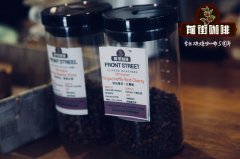
Varieties of coffee beans planted and treated in Guanacaster Coffee Manor, Costa Rica
Professional Coffee knowledge Exchange more information on coffee beans Please follow Coffee Workshop (official Wechat account cafe_style) Guanacaster Nature Reserve, Costa Rica is an important natural habitat that maintains biological diversity, including the best dryland forest habitat, biological communities from Central America to northern Mexico and major endangered plants and animals. This place

Costa Rica Guanacaste coffee bean processing method introduces what flavor difference there is in washing and sun
Guanacaste Nature Reserve is an important natural habitat that maintains biodiversity, including the best dryland forest habitats, biological communities from Central America to northern Mexico, and major endangered plants and animals. The land and sea of this place

Processing methods of characteristic flavor and taste of coffee beans in Guanacaster, Costa Rica
Professional Coffee knowledge Exchange more information on coffee beans Please follow Coffee Workshop (official Wechat account cafe_style) Guanacaster Nature Reserve is an important natural habitat that maintains biological diversity, including the best dryland forest habitats, biological communities from Central America to northern Mexico and major endangered plants and animals. The land and sea of this place

Characteristics of Flavor and Flavor of Guanacaste Coffee in Guanacaster Coffee production area of Costa Rica
Professional Coffee knowledge Exchange more information on coffee beans Please follow Coffee Workshop (official Wechat account cafe_style) Guanacaster Nature Reserve is an important natural habitat that maintains biological diversity, including the best dryland forest habitats, biological communities from Central America to northern Mexico and major endangered plants and animals. The land and sea of this place

Ethiopian coffee species Origin of Ethiopian coffee
Saifeng coffee beans grow in close to the natural environment, after years of planting under the same growth conditions, Ethiopian coffee beans have gradually adapted to the environment here. More than 60% of coffee beans are grown in forests or semi-forests. Large-scale coffee-growing villages account for about 35% of the country's total coffee production. These use multiple layers.

Coffee hunter Kawashima: searching for the real coffee taste of enlightenment
Yoshihiro Kawashima: born in Shizuoka Prefecture in 1956. In 75, he went to El Salvador alone to learn coffee cultivation and selection techniques at the National Coffee Institute. After that, it became a hot topic in the coffee industry to participate in the development of coffee farms in Jamaica, Hawaii, Indonesia and other places, and to save endangered coffee varieties in Reunion. Mi Cafeto Co., Ltd. was established in 2008.

Introduction of Fine Coffee varieties in Indonesian Musk Coffee Manor
In the 1950s, the resources of Chinese great cats were estimated to be more than 200000. After long-term overhunting, the population decreased rapidly year by year. By the early 1980s, the natural population of Chinese great cats was less than 20, 000. By the early 1990s, Zhejiang, Jiangxi, southern Anhui, Guizhou and other places have been very rare, and the population of big cats is endangered in China. Since Qiyun Mountain in Jiangxi Province in 2007
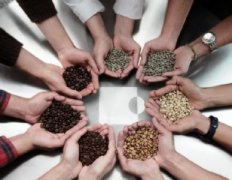
A brief introduction to the History and Culture of the Origin and Development of Coffee in Coffee Cochel Manor of Ethiopia
These forest ecosystems also have a variety of medicinal plants, wildlife and endangered species-coffee grows in areas ranging from 1400 to 1800 meters above sea level. This kind of coffee is natural or sun-cured; it is weakly moderately acidic, the fruit is full, and the average quality is good; the smell is fragrant and mellow; one drop in the mouth, endless aftertaste. According to estimates, of the 127000 hectares of planting area,

Analysis of Nicaraguan Coffee Bean species High quality nourished by Nicaraguan Coffee Bean Volcano
Professional Coffee knowledge Exchange more information on coffee beans Please follow the coffee workshop (Wechat official account cafe_style) Front Street-Niagara Coffee is much more famous than coffee, coffee was grown in the late 19th century and it was not until the mid-19th century that this crop became an important export product. The Nicaraguan government encourages European immigrants from Italy and Germany to buy

Coffee hunter Kawashima: searching for the real taste of coffee-the taste of enlightenment
Yoshihiro Kawashima: born in Shizuoka Prefecture in 1956. In 75, he went to El Salvador alone to learn coffee cultivation and selection techniques at the National Coffee Institute. After that, it became a hot topic in the coffee industry to participate in the development of coffee farms in Jamaica, Hawaii, Indonesia and other places, and to save endangered coffee varieties in Reunion. Mi Cafeto Co., Ltd. was established in 2008.

An introduction to the flavor and taste of coffee from Manor Santa Barara, Honduras with a light fruity flavor.
Honduras is one of the least developed countries in Latin America. Agriculture is the leading industry of the national economy, and its industrial foundation is relatively weak. The economy grew by 3.5% in 2012. Rich in bananas, coffee, cotton, coconut, tobacco, sugar cane and so on. Economic activity and population are mainly concentrated in the capital and the central and western parts of San Pedro Sula, while the east is sparsely populated. There are many small enterprises in industry and mining, including textiles,

Costa Rican coffee origin story Costa Rican coffee culture Costa Rican coffee story
For more information on coffee beans, please follow the Coffee Workshop (official Wechat account cafe_style) Coffee History of Costa Rica when we landed in San Jose, we saw from the sky Costa Rica's lush green valleys and beautiful mountains, which is not yet the tip of the iceberg of affluence in this country. The biodiversity here accounts for about 5% of the world's biodiversity, per 10,000.
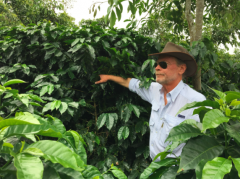
Finca Santa Ana La Huerta, Guatemala
Weixin Official Accounts cafe_style Rony Asencio and his family have been growing coffee in Finca San- ta Ana La Huerta since 1990. Before that, Rony's family originally owned a coffee estate in Antigua during the colonial period.
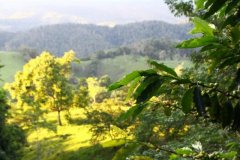
Diversity of Colombian refined coffee varieties Colombia's natural diversity can prevent coffee pests
More than 50% of Colombia's forests are natural. It has 55000 kinds of animals and plants. According to the Financial Times, 10% of the world's biodiversity can be found in the Amazon region of Colombia. The biodiversity in Colombia is shocking. You can taste it in every cup of coffee. But these are not just impressive facts. They are also what my country can do.

Introduction to the planting environment of Rwanda boutique coffee bean flavor manor with excellent evenness
Rwanda has tin, tungsten, niobium, tantalum, Beryl, gold and so on. The storage of tin is about 100000 tons. Peat reserves are estimated at 30 million tons. Lake Kivu has natural gas reserves of about 60 billion cubic meters. The Niagabango tungsten deposit is the largest tungsten mine in Africa. The forest covers an area of about 620000 hectares, accounting for 29 per cent of the national area, and is one of the important natural resources of Rwanda. [3] Plant Luwang

Aromatic Ethiopian coffee growing environment Flavor Taste Introduction
Located in the most privileged natural conditions, Ethiopia produces unique high-quality coffee every year. Ethiopia's coffee growing cycle brings harvest joy to the country every year. Beautiful white coffee flowers bloom and bear fruit every year between March and April. Only the reddest and most mature fruits are selected between September and about December

Ethiopian coffee
Ethiopia's Yirgacheffe coffee is petite, but gentle and sweet. As the home of coffee, Ethiopia's millennia of growing and processing traditions have resulted in high-quality washed Arabica beans. Light baked with unique lemon, floral and honey sweet aromas, soft fruit acids and citrus notes, fresh and bright taste. not